|
Mine
Fields dettering the use of Lands When
Israel withdrew from South Lebanon in year 2000 it left behind
a deadly legacy of some half million landmines. Even though five
years have now passed since the end of the occupation the bulk
of these landmines are still in place and causing death and injury
to the local population.
The south of Lebanon is the most highly infected part of the country
with some 370,000 plus landmines in the immediate area of the
UN delineated “Blue Line” between Lebanon and Israel.
Mr.
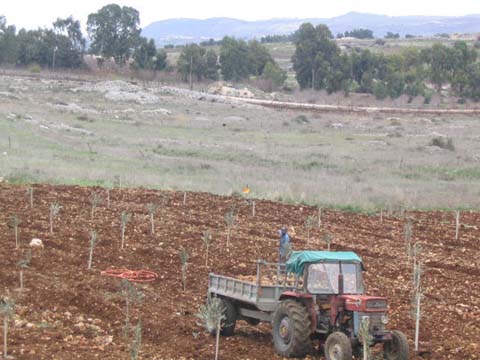
Ali Marzouk Mohanah is the owner of a land adjacent to the Blue
Line. To make a living for his family, he planted a part of his
land with olive trees. This will help him in producing olive oil
and in selling it. It is important to note that olive crop production
is considered the subsistence base of large population groups
in Lebanon and has significant social and economic importance
on the national level.
Mr.
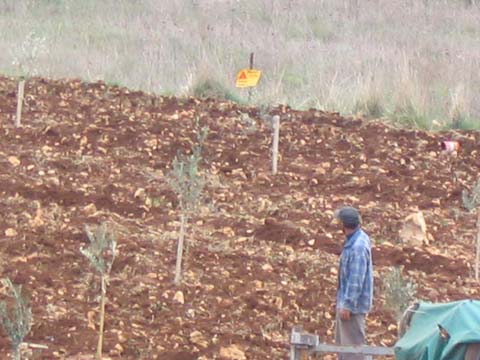
Mohanah cultivated his land up to the edge of the mined area posing
immediate danger to him and his family’s life. The other
big part of his land, which is contaminated with mines, obstructs
cultivation activities and blocks him from planting olive trees.
IIn
order to avoid further incidents and agricultural blockages, Mr.
Mohanah and many other locals living adjacent to the remaining
minefields are eager to use every square meter of their land as
they are already ploughing and planting their crops up to the
minefield fence; thus, they urgently request the clearance of
the mined portion of their lands.
|
|
|
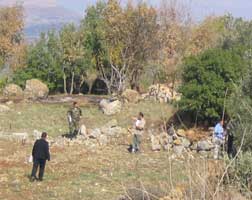
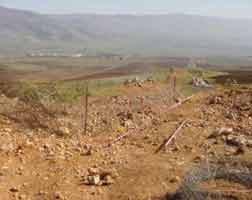
Mr.Mohanah
has planted the part of his land free from mines with
olive trees right up to the edge of the minefield
|
|
|
|
|
|
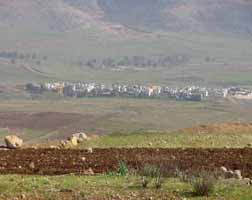
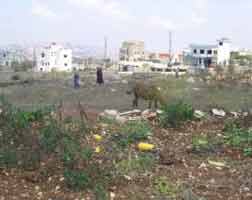
Looking with bitterness beyond the Mine Field
fence
to his trapped land |
|
|
|
|
|
|
| |
Humanitarian
Impact of Mine Clearance
Kafer
Tibnite is one of the villages that were liberated after the Israeli
withdrawal in 2000; it is located in Al Nabatiyah district, South
Lebanon. Just like most of the other villages in this area the
presence of Mines and UXOs still threatens the lives of the locals,
hinders any development and creates an obstacle to their every
day life.
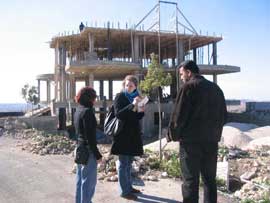
Mr. Hassan Aaref Zaytoun, a landowner in Kafer Tibnite, was displaced
to Africa due to the Israeli Occupation, and recently came back
to rebuild his parents house that was destroyed by the war in
order to live in it with his new family and rehabilitate the land
around it. Unfortunately, this was not possible since his land
is contaminated with mines. Mr. Zaytoun reported this to the UNMAS
Programme in South Lebanon who started clearance operations in
June 05, located and destroyed several AP Mines and delivered
back the cleared area to him.Mr.
Zaytoun is very happy and grateful with the clearance done by
MACC SL. Now his dream has become true, and he has started building
a home for his family where they can live back in their village
|
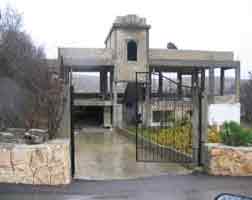
Mr.Zaytoun
expressing his happiness while standing in front of his
home |
|
|
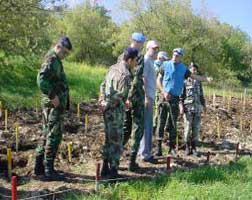
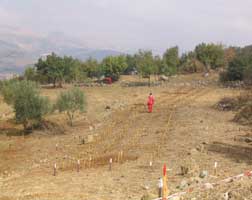
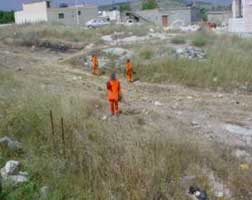
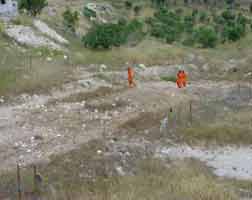
| Walking alongside the cleared mine
rows near UNIFIL
position 6-50 near the border |
|
| |
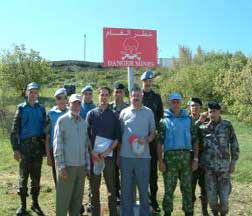
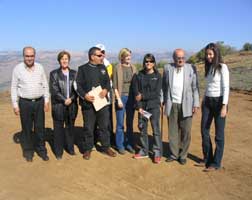
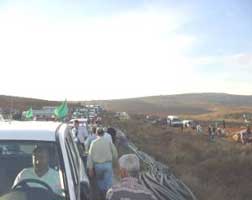
| The field visit included a visit to
the UNIFIL Ukrainian Engineers operational demining site |
|
|
| |
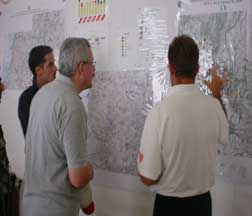
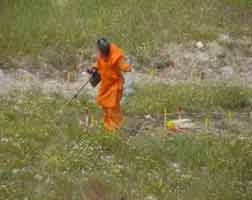
| The Operations Manager
of BACTEC explains their operations and locations in the
current phase |
|
|
| |
|
| |
|
|
|
|
|
|
| |
The Al Qlaiaz Minefield
Belt One of the main tasks in the Phase 3 OES
area was the clearance of a minefield belt in Al Qlaiaz. The belt,
laid twenty years ago, was estimated to contain 13,000 AP mines.
Located below the town of Marjayoun it extended from Burj Al Moulouk
village to Debbin, a distance of five kilometres. The El Qalaiz
minebelt consisted of 4 rows of AP mines extending a minimum width
of 10 metres, depending on the ground. It was fenced with barbed
wire, indicating clearly it was a protective minefield for the
Marjayoun area.
For operational purposes the minefield belt was divided into
phonetically named sections from Alpha to Kilo. Each section comprised
a number of minefields, but this arrangement simplified the process
of recording the clearance. Demining assets were spread along
the sections enabling many teams to work on the belt simultaneously,
while respecting the safety distances.
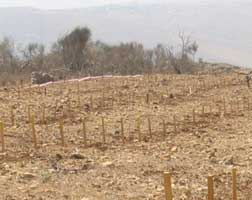
| A cleared section of the Al Qlaiaz
minefield belt |
A total area of 199, 381 square metres of land
was released during this clearance process. A total of 15,877
Anti-Personnel mines, 1 Anti-Tank mine and 207 items of Unexploded
Ordnance were located and destroyed during the four months it
took to complete clearance of the area. |
| A cleared portion of the four row minefield
belt in “India” section |
| Final Quality Assurance
check on completion of “India” section before
the landowner is shown the boundaries of the cleared area |
| The village representative, landowners
and MACC SL Community Liaison Assistants and Public Information
Section visit “India” section on completion day.
One landowner, previously injured in the former minefield,
walked on his land for the first time in twenty years. |
|
|
| |
| |
“Swing
Gate Charlie”- MF143 This was the most western
border post marking the start of the occupied area. It is located
next to the Mediterranean sea on the coastal route south from
Tyr.
The minefields surrounding the post have been cleared during Phase
2 of the OES
project.
|
|
|
|
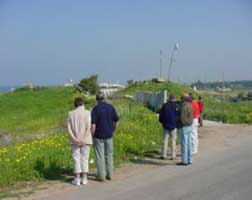
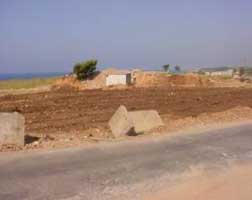
| The border post “Swing Gate Charlie”
south of Tyr, en route to Naqoura, in March 2002 before the
OES
project began |
|
| The same area following clearance |
|
|
| |
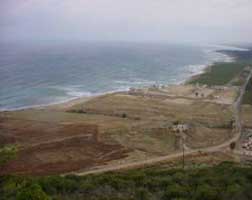
| A distant view of the area during its
clearance phase |
|
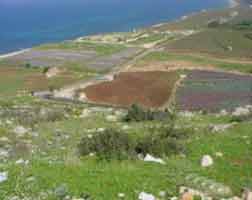
A view from a nearby high point showing
the extensive cultivation that has taken place in the former
minefields surrounding “Swing Gate Charlie”
|
|
|
| |
Al
Bayyadah Situated close to
the village of Al Bayyadah is a major commercial development that
has commenced in a former mined area, now cleared through the
OES
project. The area contained seven different types of Anti-Personnel
and Anti-Tank mines, and also incorporated a large cluster bomb
strike area from which 842 cluster bombs were located and destroyed.
Clearance of the 1.7 million square metre
area has released land that is now being subdivided into 800 plots;
each with new road accesses, and water and sewerage services.
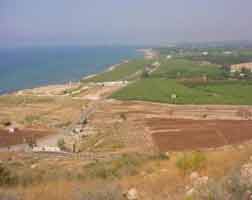
The location is very attractive geographically; on the coast a
few kilometres south of Tyr with panoramic views of the Mediterranean
Sea. The developers also plan for a hotel complex and recreational
activities in the area; both of which are sure to attract visitors
both from within, and outside Lebanon.
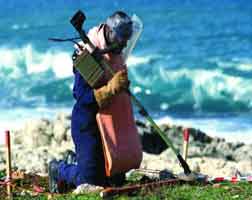
A Deminer conducting Manual clearance
in a minefield near the beach
|
|
| A view from near Al Bayyadah of the
coast |
|
|
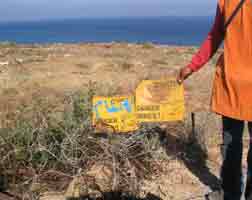
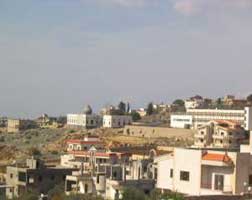
| The cluster strike area now being
developed into a commercial land subdivision |
|
| |
| |
Clearance of At Tiri Village
The village of At Tiri was hit by cluster munitions
strikes in 1978. During the occupation the majority of the 5,000
residents left the village with only 100 remaining throughout
the conflict.
In April 2002, shortly before the OES
project began a young boy was killed and two of his brothers were
injured, one seriously, when a cluster bomb (BLU 63) they were
playing with exploded.
The cluster bombs covered a wide area incorporating many residences
and public facilities. The areas surrounding the school and the
medical facility have now been cleared, and while the school is
not yet being used it has been rehabilitated ready for the next
years’ enrolment. The medical facility awaits rehabilitation
and equipment.
A new mosque has been built in the former cluster strike area,
funded by a woman from Qatar.
A total of eight CBU areas were cleared under the OES
project, and two minefields.
|
| The new mosque, and to the right the
rehabilitated school |
|
|
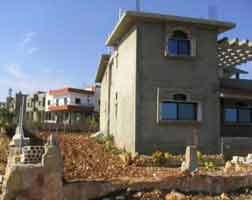
| House and garden under construction
in At Tiri post clearance |
|
| |
| A BLU 63 Cluster sub-munition.
A total of 99 were located and destroyed from around the houses
and buildings of At Tiri village |
The total land area released through clearance of the sub-munitions
within the village was 228,377 square metres.
|
| A further new home being constructed
inside the village of At Tiri |
|
|
| |
| |
Al Wazzani Water Project
Land hosting part of the pipeline taking water from
the Al Wazzani spring, near Al Wazzani village, was cleared of
Anti-Personnel mines during Phase 2 of the OES
project. This ambitious project would not have been possible without
the input provided by the OES
mine clearance. Water coming from the Al Wazzani spring feeds
villages including Al Khiam, Al Qlaiaz, Marjayoun, Kafer Kela
and Sarda villages; all located in the north east of the OES
project area.
An opening ceremony was held for the Al Wazzani Water Project
on 16 October 2002 when water from the spring started to pump
through the pipeline.
| Part of the land cleared to lay the
pipeline. |
|
| An area near Al Wazzani now cleared
and ploughed ready for planting. The village of Al Rhajjar
is in the background. |
|
|
| The official Opening Day Ceremony for
the Al Wazzani Water Project on 16 October 2002 |
|
| |
Bayt Yahun - From Start to Handover
The village of Bayt Yahun, situated on the border between
OES
2 and OES
3 in the Phase 2 area was the start point of the Operation Emirates
Solidarity project when clearance began in May 2002.
Bayt Yahun was surrounded by minefields; a total of twenty one
areas containing anti-personnel mines were cleared.
The following are before and after images from a couple of the
minefields there.
The three photos that follow relate to MF 500 which ran alongside
a partly completed home and down behind the house to an agricultural
area, as shown in the second photo.
|
| MF 500 during clearance by MineTech
International in May - June 2002 |
|
|
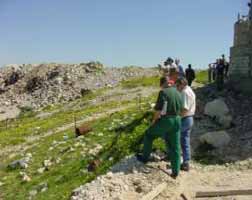
| Looking at MF 500 on the 5th March
2002 prior to OES
Contracts being awarded |
|
| MF 500 during clearance operations;
yellow pickets indicate the mines that have been located and
destroyed |
|
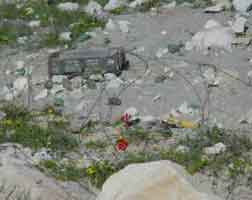
Surface No 4 AP mines washed out of
position in MF 500 before clearance commenced
|
|
| Deminer working in MF
500 |
|
| |
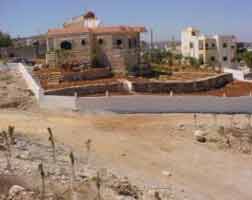
| This photo shows the land now (MF 500).
The house has been completed, and the agriculture land can
now be accessed and used. The trees to the forefront of the
photo were planted under the “Trees for Mines”
initiative of the PRSG’s office |
|
Post Clearance Images Many
new homes have been constructed, and other partly constructed
homes completed since the minefields have been cleared. People
have planted their lands predominantly in vegetables and olive
trees. The Post Clearance Review of the area confirmed total confidence
in the land by the landowners.
|
|
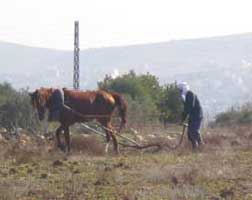
| A landowner back ploughing his land
after the mines have been removed |
|
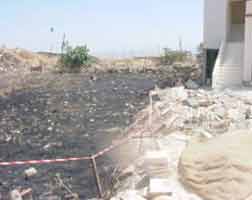
| MF 178 before clearance AP mines were
within 1m of the house walls |
|
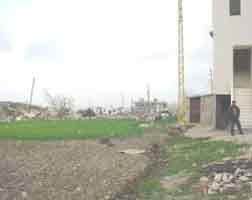
| MF 178 after clearance and now back
in productive use |
|
| |
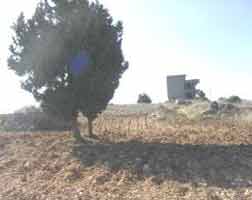
| Former mined land now ploughed ready
to plant |
|
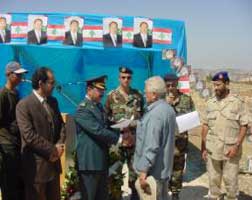
| A landowner receiving the handover
certificate for his cleared land from The National Demining
Office (NDO), the national mine action institution. |
|
|
| |
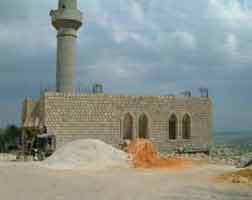
| New mosque currently under construction
in Bayt Yahun |
|
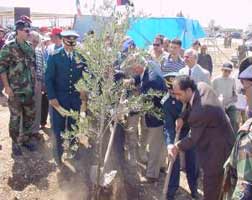
| An olive tree planted on a cleared
minefield in Bayt Yahun village to commemorate the handover
ceremony of the first areas of land in Bayt Yahun |
|
|
| |
Handover Ceremony During
the official handover of minefields cleared in Bayt Yahun landowners
received their handover certificates from the national mine action
institution, the National Demining Office.
On this day, the first tree was planted in the village under the
auspices of a “Trees for Mines” project initiated
by the PRSG for South Lebanon, Mr Staffan de Mistura. A total
of 16,500 trees have now been planted in Bayt Yahun with funding
from the Swedish government. Some have been planted inside former
minefields, while others are lining the main road.
|
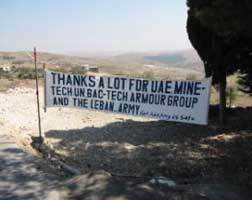
A “Thank You” notice placed
in the village by the community of Bayt Yahun
Photo
|
|
|
| |
Operations Emirates Solidarity
- The Launch of the Project The
official launch of the project was conducted in a ceremony in
Bayt Yahun on 28 May 2002 followed by an International Support
Group (ISG) meeting on Mine Action and press conference held at
the office of the MACC SL. Many officials including ambassadors,
officials from the National Demining Office and the PRSG for South
Lebanon, Mr Staffan de Mistura attended. In the field the community
head or Moukthar of Bayt Yahun joined the celebrations.
The two companies contracted to conduct the
mine clearance, MineTech of Zimbabwe and BACTEC from the United
Kingdom presented their demining teams and equipment through demonstrations.
Clearance of some of the minefields in Bayt Yahun had already
commenced by MineTech earlier in the month.
At the commencement of this second phase of
the project the 306 known targets within a geographical area covering
an estimated 472 square kilometres, were estimated to take 2 years
to complete. The previous Phase; the clearance of known booby
traps by BACTEC within the OES
Phase1 area of operations had commenced in November 2001 and was
completed on 8 May 2002.
OES
Phase 2 was in fact completed on 26 August 2003, some nine months
ahead of schedule. A total of 39,656 mines and items of unexploded
ordnance were located and destroyed and a total land area released
of 4,315,130 square metres from 487 targets.
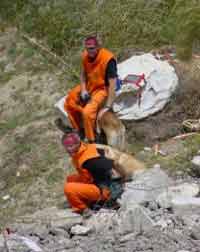
| MineTech Mine Detection Dog handlers
and dogs take a break between demonstrations |
|
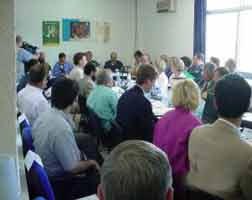
| The ISG meeting and press conference
held in the MACC SL after the field visit to launch the OES
project in Bayt Yahun. |
| One of the minefield areas (MF 500)
marked for clearance in Bayt Yahun |
| A Bozena 3 mini flail owned by BACTEC
International on display |
|
|
| |
|
|
| |
|
|
| |
Copyright ©2004
MACC SL - All Rights Reserved |
|